Riuh: A Refined Sans Serif Font for Handmade Creators
As someone who designs printable wall art, hand-stamped tags, and custom wedding invitations for my small shop, I’ve learned that the right font isn’t just about looks—it’s about trust. When a customer sees a clean, confident typeface on a candle label or a boutique gift tag, they subconsciously associate it with care, quality, and intention. That’s why Riuh has quickly become one of my go-to sans serif fonts—not because it’s trendy, but because it delivers quiet sophistication without sacrificing clarity or versatility.
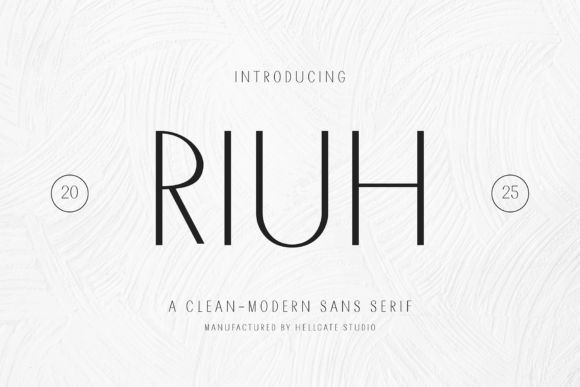
Riuh is an exquisite sans serif typeface built around modern aesthetics and refined elegance. Its clean, balanced lines feel intentional—neither too stark nor too soft—with subtle curves and consistent stroke weight that give it warmth and presence. It doesn’t shout; it invites. That makes Riuh especially powerful for physical products where legibility and emotional resonance matter equally: think engraved wooden signs, heat-pressed tote bags, foil-stamped greeting cards, or die-cut sticker sheets sold on Etsy.
I use Riuh most often for display purposes—short phrases, names, titles, and decorative wording—where its graceful proportions shine. On a farmhouse-style welcome board? Perfect. On a minimalist baby shower invitation? Effortlessly calming. On a set of planner undated monthly covers? Crisp, calm, and consistently professional. Because Riuh is designed as a display font first, it’s not intended for long paragraphs—but that’s exactly what makes it ideal for crafters: we rarely need full-body text in our labels, SVG cut files, or digital downloads. We need impact, recognition, and polish in just a few words.
For Cricut and Silhouette users, Riuh cuts beautifully at sizes as small as 8pt on matte vinyl stickers—no jagged edges or collapsed counters. Its open letterforms (like the ‘a’, ‘e’, and ‘s’) hold up well even when scaled down for product tags or jar labels. I’ve used it for soy candle branding, printing directly onto kraft paper labels with a thermal printer—and every letter remains distinct and inviting. For larger applications like wall art prints or framed quote posters, Riuh scales up with equal grace, retaining its subtle character without looking thin or washed out.
Seasonal and themed projects benefit especially from Riuh’s neutral-yet-elegant tone. Last holiday season, I paired it with a delicate handwritten script for “Hand-Poured • Small Batch • Made With Love” on artisan soap packaging—and customers commented on how “thoughtful” the labeling felt. For spring collections, I used Riuh alone in all caps for “Wildflower Collection” on seed packet designs, letting its clean geometry echo botanical simplicity. And for summer farmers’ market signage? A bold weight (if available) or layered shadow effect gives it presence without clutter.
Font pairing is where Riuh truly earns its place in my design toolkit. As a clean sans serif font, it plays exceptionally well with expressive script fonts—think flowing cursive for names or accents—and also balances beautifully with understated serif fonts for body copy in invitation suites. Try Riuh for headlines and a warm, low-contrast serif like Playfair Display for details like date, time, and location. Or pair it with a friendly handwritten font for a personal touch on greeting cards or birthday printables. The contrast creates visual hierarchy while keeping everything cohesive and commercially polished.
Before downloading Riuh, I always check what’s included: multiple weights (Light, Regular, Bold), true italics, standard ligatures, and OpenType features like stylistic alternates. These aren’t just nice-to-haves—they’re production essentials. Swashes might not matter for a product label, but having a Bold weight means I can avoid faux-bold distortion in mockups. Multilingual support (if included) lets me expand into bilingual markets without redesigning layouts. And file formats—OTF, TTF, and WOFF—mean I can use Riuh across design software, web templates, and even embedded PDFs for editable Canva-style printables.
One practical note every crafter should keep top of mind: commercial licensing. Riuh is a premium font, and its license must explicitly allow use in physical goods, digital downloads, SVG files, and client work. I always verify this before adding it to any template shop listing or merchandise line—especially since platforms like Etsy and Creative Market require proof of licensed assets upon request. Using Riuh under a personal-use-only license on a best-selling printable planner could risk takedowns or lost sales. When you invest in Riuh, invest in the right license—it protects your brand, your time, and your reputation.
What sets Riuh apart from other modern sans serif fonts isn’t flashiness—it’s reliability. It works on kraft paper and glossy foil. It reads clearly on a tiny luggage tag and commands attention on a 24x36" gallery print. It supports brand consistency across stickers, social media graphics, packaging, and web design without feeling repetitive. For handmade sellers building a recognizable aesthetic—or printable creators designing cohesive bundles—Riuh delivers the kind of quiet authority that turns casual browsers into loyal customers.
If you’re selecting fonts for your next collection of wedding stationery, seasonal SVG bundles, boutique product labels, or printable wall art, give Riuh space to breathe in your layouts. Let its refined elegance speak for your craftsmanship—because sometimes, the most powerful statement a maker can make is simply saying something beautiful, clearly.